Home › Blog › Does Low Vitamin D Cause Low Testosterone in Men?
Causes & LifestyleDoes Low Vitamin D Cause Low Testosterone in Men?
| The question | Does low vitamin D cause low testosterone in men — and what to do about it. |
| The link | Low vitamin D is associated with lower testosterone; the “sunshine vitamin” acts more like a hormone in the body. |
| The fix | Sensible sun, vitamin-D foods, and, if a test shows a deficiency, a supplement guided by a professional. |
| Bottom line | A blood test is the only way to know your level. Individual results vary; this is not medical advice. |

Of all the nutrients tied to male health, few come up as often as the “sunshine vitamin.” It shows up in conversations about energy, mood, immunity and, increasingly, hormones — which raises a question a lot of men ask: does low vitamin D cause low testosterone in men? The honest answer is nuanced, and worth understanding properly rather than through headlines. This guide explains the real link between vitamin D and male hormones, the signs of deficiency to watch for, and the natural steps that keep your levels where they should be.
Why vitamin D is different from other vitamins
Vitamin D is unusual. Unlike most vitamins, which you have to get from food, your body can make vitamin D itself when sunlight hits your skin — and once activated, it behaves less like a typical vitamin and more like a hormone. Receptors for it are found in tissues all over the body, including reproductive tissue. That wide reach is exactly why it turns up in so many aspects of male health, and why a shortfall can be felt in several ways at once.
The vitamin D and testosterone link
Here is the careful version of the answer. Studies consistently find that low vitamin D is associated with lower testosterone in men — the two frequently appear together, and men with healthier vitamin D status tend to have more favourable testosterone levels. What is less settled is causation: research on whether taking vitamin D actually raises testosterone in men who supplement is mixed, with some studies showing a benefit (particularly in men who were deficient to begin with) and others showing little effect. The sensible takeaway is not to treat vitamin D as a testosterone booster, but to recognise that keeping it in a healthy range supports overall male health — and that a genuine deficiency is worth correcting regardless.
Signs of vitamin D deficiency in men
Vitamin D deficiency is common, especially in less sunny climates, in men who work indoors, and in those who cover up or have darker skin. The tricky part is that its signs are vague and overlap heavily with other issues:
- Persistent fatigue and low energy.
- Low or flat mood.
- Muscle weakness, aches or bone discomfort.
- Getting sick more often than usual.
- A general sense of running below par.
Notice how closely these mirror the signs of low testosterone in men — which is a big part of why the two get confused, and why guessing is a poor strategy. Because the symptoms are so non-specific, a simple blood test is the only reliable way to know whether vitamin D is actually the issue.
See the JellyBlue Daily Vitality Formula →
How to raise your vitamin D naturally
Sensible sun exposure
Sunlight is the main natural source, since your skin makes vitamin D in response to it. Short, regular periods of midday sun on bare skin — without burning — help most. How much you need varies with your skin tone, location and the season, and sun safety always comes first, so this is about sensible exposure, not baking.
Vitamin D foods
Diet can help top things up. Fatty fish (salmon, mackerel, sardines), egg yolks, and fortified foods like some milks and cereals are the main dietary sources. Realistically it is hard to get enough from food alone, but these foods sit naturally within the wider eating pattern in our best foods for male vitality and testosterone guide.

Supplementing wisely
For many men — especially through darker winter months — a vitamin D supplement is the practical way to maintain a healthy level. General guidance for adults often lands around 600 to 800 IU per day from all sources, though needs vary and correcting a true deficiency may take more. Because too much vitamin D can be harmful, the smart approach is to test first, then dose with guidance from a healthcare professional rather than guessing.
Where a daily vitality routine fits
Correcting a vitamin D deficiency is a specific, test-guided job. Around it, the broader habits that support male hormones still apply — good sleep, regular movement, a whole-food diet and stress management, all of which we cover in how to boost male vitality and energy naturally. Some botanicals are traditionally used to support male vitality on top of those fundamentals: maca and tongkat ali are traditionally associated with male energy and drive, and ashwagandha is an adaptogen traditionally used to help the body handle everyday stress.
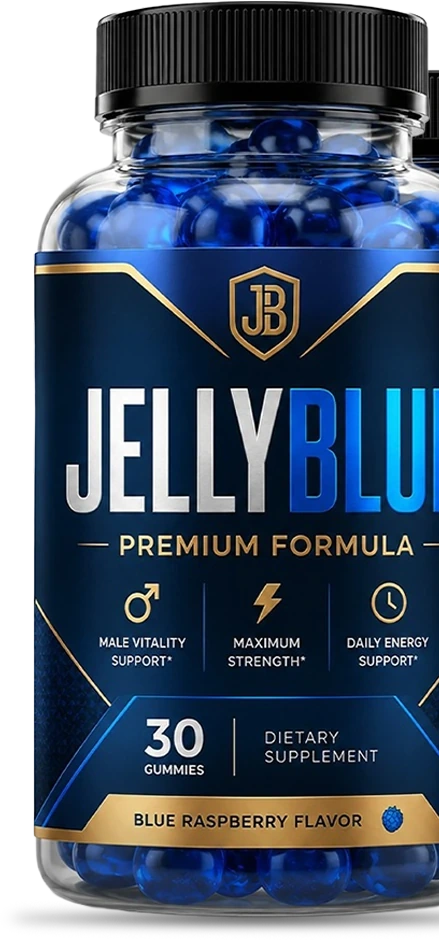
JellyBlue brings maca, tongkat ali, ashwagandha and four more vitality actives together in one blue-raspberry gummy a day, with doses printed openly on the label — a simple daily anchor that sits alongside sensible sun, good food and, where a test calls for it, a vitamin D supplement.
See JellyBlue Multi-Bottle Packages →
When to see a doctor
If you have ongoing fatigue, low mood, muscle weakness or the other signs above, ask your doctor for a vitamin D blood test rather than self-diagnosing — and mention any symptoms that overlap with low testosterone, since a check-up can look at both. Do not take high-dose vitamin D long term without guidance. This article is general information, not medical advice, and never a substitute for a proper assessment.
Cover the basics, support your vitality
JellyBlue puts seven real vitality actives — including maca, tongkat ali and ashwagandha — into one easy daily gummy, backed by a 60-day money-back guarantee.
See JellyBlue PackagesFrequently asked questions
Does low vitamin D cause low testosterone in men?
Low vitamin D is associated with lower testosterone in men, and the two often appear together. Vitamin D acts more like a hormone than a typical vitamin and receptors for it are found throughout the body, including in reproductive tissue. Research on whether correcting a deficiency raises testosterone is mixed, but keeping vitamin D in a healthy range supports overall male health. A blood test is the only way to know your level.
What are the signs of vitamin D deficiency in men?
Common signs include persistent fatigue, low mood, muscle weakness or aches, more frequent illness, and low energy. These overlap heavily with the signs of low testosterone, which is one reason the two are easy to confuse. Because symptoms are non-specific, a simple blood test is the reliable way to confirm a deficiency.
How can men raise their vitamin D naturally?
Sensible sun exposure is the main natural source, since the body makes vitamin D from sunlight on the skin. Food sources include fatty fish, egg yolks and fortified foods, though it is hard to get enough from diet alone. Many men, especially in less sunny climates or who work indoors, also use a vitamin D supplement — ideally guided by a blood test and a healthcare professional.
How much vitamin D do men need?
General guidance for adults is often in the range of 600 to 800 IU per day from all sources, though individual needs vary with sun exposure, skin tone, weight and location. Some people need more to correct a deficiency. Because too much can be harmful, dosing to correct a low level is best done with a blood test and professional guidance rather than guesswork.
Can a vitality supplement help alongside vitamin D?
Correcting a vitamin D deficiency is a specific job best guided by testing. Alongside good vitamin D status, some botanicals such as maca, tongkat ali and ashwagandha are traditionally used to support male vitality and a steadier stress response. They complement — rather than replace — sensible sun exposure, diet and, where needed, a vitamin D supplement. Individual results vary and this is not medical advice.
About the JellyBlue Research Team
The JellyBlue Research Team is an independent men’s-health content group that reviews traditional-use evidence and public health guidance to produce clear, practical, non-hyped reads on male vitality. We describe ingredients in terms of their traditional and general use, cite public sources, and always encourage readers to bring persistent symptoms to a qualified healthcare professional. We do not manufacture the product and we are not a medical provider.
References
- National Institutes of Health, Office of Dietary Supplements. “Vitamin D — Fact Sheet for Consumers.” ods.od.nih.gov
- MedlinePlus, U.S. National Library of Medicine. “Vitamin D Deficiency.” medlineplus.gov
- National Center for Complementary and Integrative Health (NCCIH). “Vitamin D.” nccih.nih.gov
- MedlinePlus, U.S. National Library of Medicine. “Testosterone.” medlineplus.gov
† These statements have not been evaluated by the FDA. This product is not intended to diagnose, treat, cure or prevent any disease. This article is for general information only and is not medical advice. Individual results vary.