JellyBlue Official Website › Articles › Safety
SafetyWho Should Not Take JellyBlue: Beyond The Nitrate Warning
The nitrate and PDE5 conversation covered on this site is one specific warning about three ingredients acting on the same pathway. It is not the only one. Grape seed, ashwagandha and Tongkat Ali each carry a separate, published safety signal that has nothing to do with blood vessels, and each points at a different reader: someone on a blood thinner, someone on thyroid medicine, and someone managing a hormone-sensitive prostate condition.
Why one warning is not the whole picture
A separate article on this site sets out the nitric-oxide pathway: three ingredients here (L-arginine, beet root and grape seed) push blood vessels to widen, and three drug classes (nitrates, several blood-pressure medicines and PDE5 inhibitors) push the same pathway on purpose. That is a real, specific, well-documented interaction, and it deserved its own article rather than a line in a longer one.
It is also not the only specific conversation this formula raises. Three of the seven ingredients on the panel each have a published safety signal that sits on a completely different axis from blood pressure: one on clotting, one on thyroid hormone, and one on androgen-sensitive tissue. Each of those is worth naming on its own, for a different reader, rather than folded into a single generic sentence about talking to a doctor.
- Grape seed extract has shown measurable anticoagulant and antiplatelet activity in laboratory studies, which is a specific question for anyone on a blood thinner or facing surgery.
- A randomized trial found ashwagandha raised thyroid hormone levels in people with subclinical hypothyroidism, which is a specific question for anyone on thyroid medicine or with hyperthyroidism.
- Tongkat Ali's studied mechanism is androgenic, which is a specific question for anyone managing a hormone-sensitive prostate condition.
- None of these three is the nitrate, blood-pressure or PDE5-inhibitor conversation already covered elsewhere on this site.
- The printed label already excludes pregnancy, nursing and anyone under eighteen outright, in its own words.
JellyBlue is a dietary supplement and not a treatment for any of the conditions named below. Nothing here is medical advice, and none of it replaces a conversation with the clinician managing a blood thinner, a thyroid condition or a prostate diagnosis. MedlinePlus is a reasonable place to read further before that conversation.
Grape seed and the bleeding-risk conversation
Grape seed extract sits on the panel at 50 mg, and the case for it on a male-vitality label is vascular: a systematic review and dose-response meta-analysis of controlled trials found grape seed extract improved flow-mediated dilation, a measure of how well a blood vessel relaxes, alongside modest reductions in blood pressure and heart rate. That is the same mechanism already discussed in the nitric-oxide article, and it is the reason grape seed sits beside arginine and beet root in that piece.
A separate line of laboratory research asks a different question about the same extract: what does it do to how blood clots. A 2019 study in Nutrients tested a polyphenol-rich grape seed extract directly against both the clotting cascade and platelet function, and found dual activity: the extract prolonged clotting parameters in plasma and separately reduced platelet aggregation, working through more than one route at once. Earlier laboratory work on grape seed polyphenols found the same direction of effect on platelet adhesion and aggregation, including in blood samples carrying an added oxidative-stress signal meant to model a vascular risk factor.
None of that work was conducted at 50 mg a day in a gummy, and none of it is a clinical bleeding-event study in people already taking an anticoagulant. It is laboratory and ex-vivo evidence that the mechanism exists and moves in a specific direction: less clotting, less platelet aggregation. That direction is exactly the one that matters to three groups of readers. Someone on warfarin or a direct oral anticoagulant is already managing a narrow window between clotting too easily and bleeding too easily, and adding an ingredient that pushes the same direction, even gently, is a conversation for the prescriber managing that window rather than a guess made at a gummy bottle. Someone on daily aspirin or a second antiplatelet drug for a cardiac stent is in a similar position. And anyone with a scheduled surgery or dental procedure is routinely asked to stop supplements with a plausible bleeding-risk mechanism beforehand, which this one now has a citation for.
| What the lab work found | What it does not show | Who it is a specific question for |
|---|---|---|
| Grape seed polyphenols prolonged clotting parameters and reduced platelet aggregation in laboratory testing. | A clinical bleeding-event rate at 50 mg a day, taken alongside a named anticoagulant, over any real duration. | Anyone on warfarin, a direct oral anticoagulant, or a prescribed antiplatelet regimen. |
| The same extract separately improved flow-mediated dilation and modestly lowered blood pressure in a meta-analysis of controlled trials. | Whether the vascular benefit and the clotting effect scale the same way at a lower, food-supplement dose. | Anyone already covered by the nitrate and PDE5 article, for the blood-pressure side of the same ingredient. |
| A bleeding-disorder or a scheduled surgery is a standing reason clinicians ask patients to stop supplements with a plausible clotting mechanism. | Whether stopping this specific gummy specifically changes a surgical outcome; that has not been studied. | Anyone with a bleeding disorder, or with surgery or a dental procedure scheduled inside the next two weeks. |
The mechanism is real and published. The clinical-event evidence at this exact dose is not, which is the honest shape of most supplement-interaction questions.
Ashwagandha and thyroid medicine
Ashwagandha, at 100 mg on this panel, already carries one published safety signal discussed elsewhere on this site: a case series of liver injury reported to the US Drug-Induced Liver Injury Network. It carries a second, unrelated signal that belongs in this article instead, because it points at a different reader entirely.
A double-blind, randomized, placebo-controlled trial gave ashwagandha root extract to adults with subclinical hypothyroidism, a condition in which thyroid-stimulating hormone is mildly elevated but the person has not yet been started on replacement therapy. Over eight weeks, the ashwagandha group showed a significant improvement in thyroid-stimulating hormone and in circulating thyroid hormone levels compared with placebo, moving the numbers toward the normal range faster than they moved on their own. A separate, smaller placebo-controlled study in adults with bipolar disorder, run for a different reason, reported the same direction as an incidental finding: subtle shifts in thyroid indices on ashwagandha that were not seen on placebo.
Read plainly, that is evidence that ashwagandha has a measurable effect on the thyroid axis, not a null result. For someone with an underactive thyroid who has not yet been diagnosed, that effect might sound welcome. For two other groups it is the opposite of welcome. Someone taking levothyroxine or another thyroid-replacement medicine is already titrated to a specific hormone level by blood test, and adding an ingredient with its own effect on that same axis is a reason to flag it at the next thyroid panel rather than assume it is neutral. Someone with hyperthyroidism, Graves’ disease, or a history of thyroid autoimmunity is being managed in the opposite direction from what the trial measured, and has the clearest reason of the three to raise this specific ingredient, at this specific dose, before starting.
The trial above used a higher daily amount of root extract than the 100 mg printed on this panel, which is the same shortfall pattern documented across most of this formula's seven ingredients. A smaller amount is a smaller exposure, and for a liver-injury risk that is reassuring in the way explained elsewhere on this site. For a thyroid-axis effect it simply means the trial evidence does not tell you how much the effect shrinks at a third of the studied dose, only that the direction was real at the higher one.
Tongkat Ali and a hormone-sensitive prostate
Tongkat Ali carries the largest single milligram figure on the panel, at 200 mg, and its studied rationale across the published trials is consistently androgenic: raising testosterone or supporting the testosterone a body already makes. A standardized aqueous root extract given to ageing men over several weeks raised serum testosterone and improved quality-of-life scores in a placebo-controlled trial, and a separate six-month randomized trial combining a different Tongkat Ali extract with resistance training reported improvements in testosterone and in erectile-function scores among men with age-related androgen deficiency.
An ingredient whose own trial evidence is built on raising testosterone is, by the same logic, a specific question for a reader whose medical situation is managed by lowering it or by avoiding anything that pushes the other way. The clearest example is prostate cancer that is hormone-sensitive, a form of the disease that many standard treatments deliberately starve of androgen. Someone on androgen-deprivation therapy, or with any diagnosis where a urologist or oncologist has already discussed androgen sensitivity, has a direct and specific reason to raise this exact ingredient, by name, before adding it, rather than reading the front-of-bottle phrase "male vitality support" as a general green light.
This is narrower than it might sound. It is not a statement that Tongkat Ali causes prostate cancer, and the trials cited here were not run in men with that diagnosis; they were run in generally healthy or moderately deficient ageing men, which is a different population. It is a statement about mechanism matching medical situation: an ingredient whose entire published case rests on an androgenic effect deserves a specific conversation from anyone whose treatment plan is built around the opposite effect, in the same way a decongestant deserves a specific conversation from someone with high blood pressure even though the trials behind it were not run in that group either.
Order JellyBlue once these three questions are answered
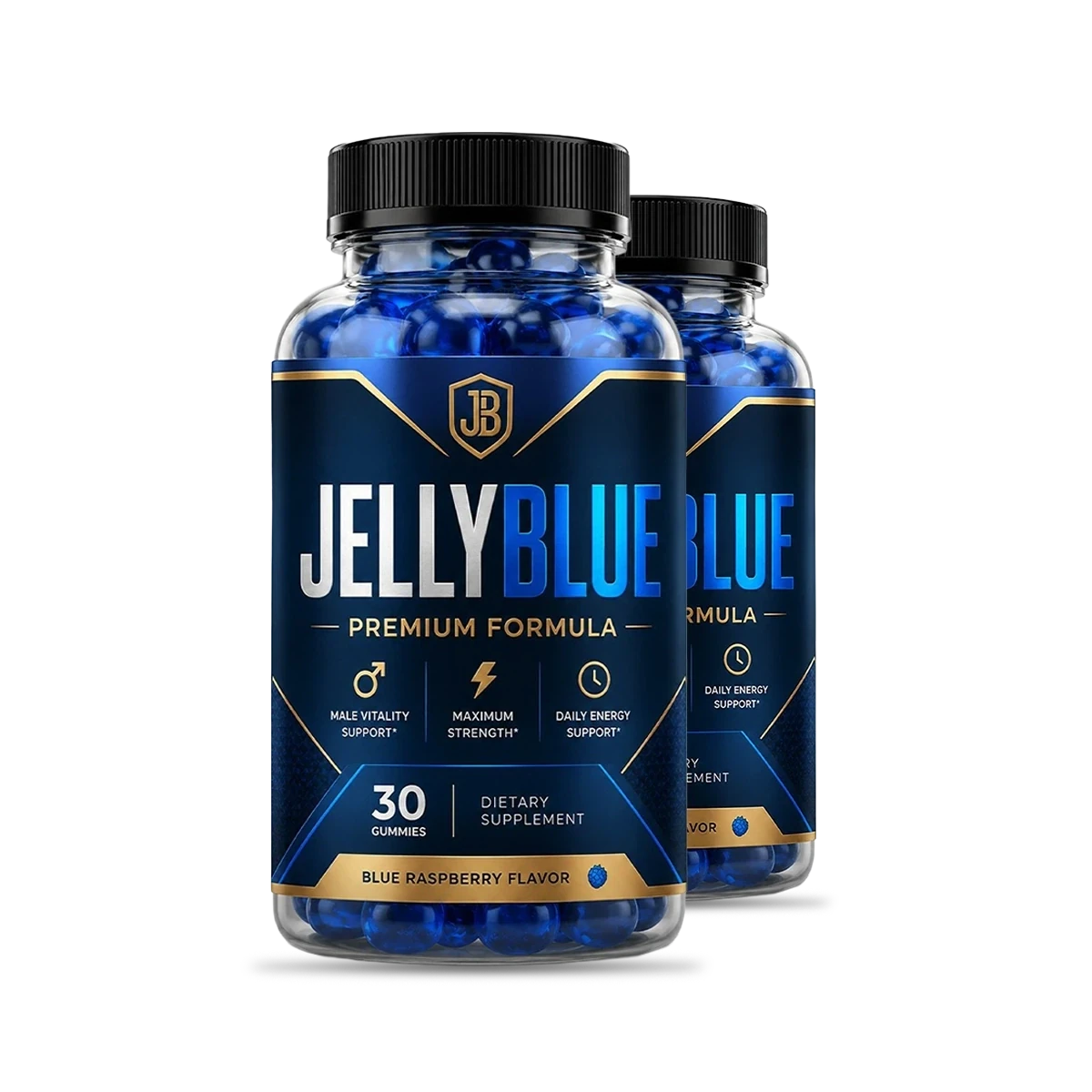
One chewable gummy a day, 30 to a bottle, 7 actives with a milligram figure beside every one. Two bottles covers the 60-day window exactly.
Price at the seller’s checkout · 60-day money-back guarantee from purchase
Order JellyBlueWhat the label itself already excludes
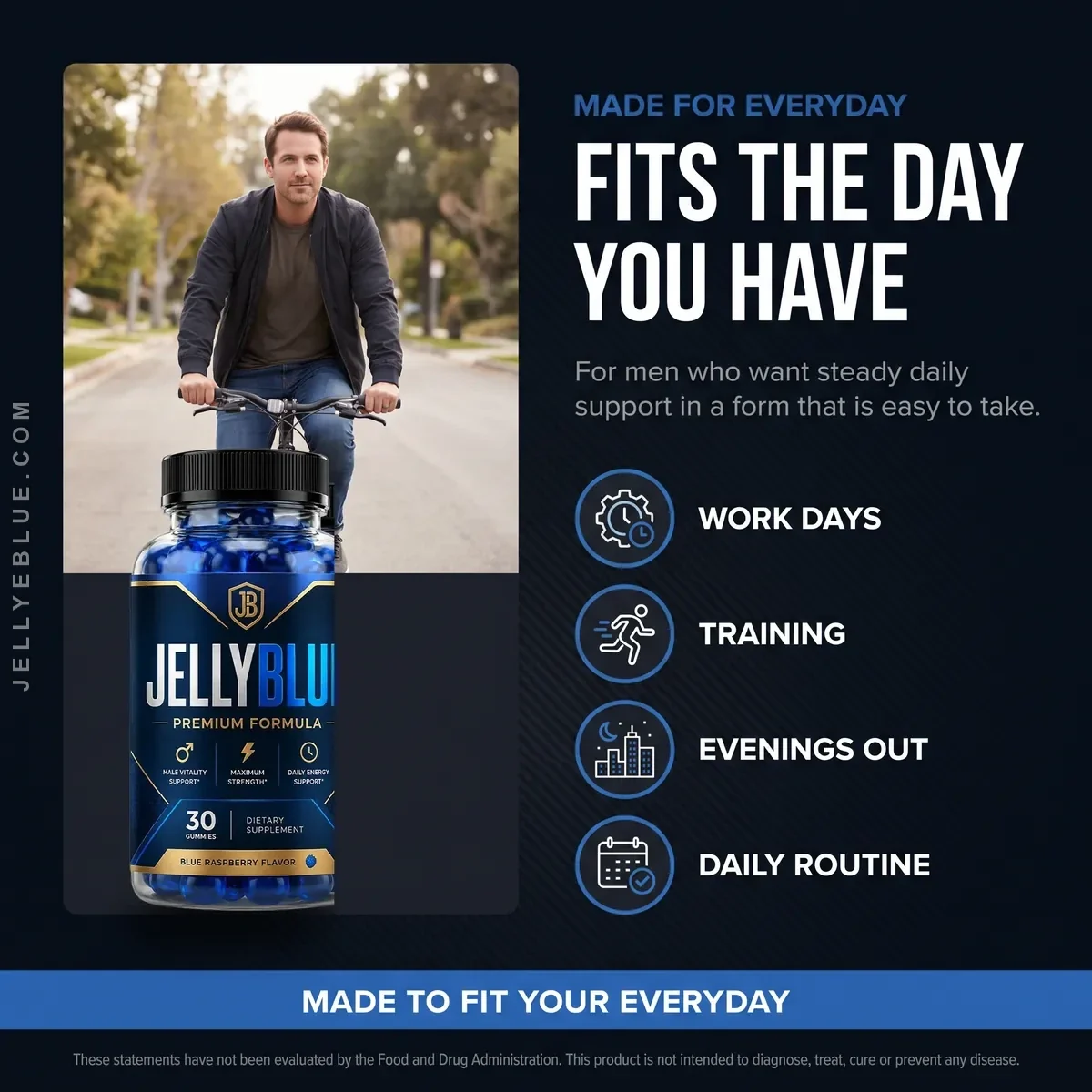
The printed caution on the JellyBlue container is short and does its own version of this job, in its own words: pregnant or nursing mothers, children under the age of eighteen, and anyone with a known medical condition are told to consult a physician before using this or any dietary supplement. That line is the manufacturer’s own, printed on the artwork, not an addition made here.
The three conversations above are more specific versions of that same line, aimed at three readers who might otherwise read "consult a physician" as boilerplate and skip past it. A general practitioner or pharmacist who hears "grape seed, ashwagandha and Tongkat Ali, at these three amounts" can give a more useful answer than one who only hears "a vitality gummy," and naming the ingredients is what makes that possible.
What this article is not saying
An article that names three interaction questions is more useful if it also says clearly what is not one, because a list of cautions that never ends stops being read carefully by the point it matters.
An occasional aspirin or ibuprofen for a headache
Occasional over-the-counter pain relief is not the bleeding-risk conversation above. That conversation is about a standing anticoagulant or antiplatelet prescription, taken daily, where the two effects would be layered for months rather than for a single afternoon.
A multivitamin, on its own
Nothing on this panel overlaps with a standard multivitamin, and a multivitamin carries none of the three mechanisms discussed here. Stacking the two is a duplication question at most, not an interaction one.
Normal thyroid function, with no medicine and no diagnosis
The thyroid trial above was run in people already diagnosed with subclinical hypothyroidism. Someone with no thyroid diagnosis and no thyroid medicine is not the reader that section is written for, and nothing here suggests a healthy thyroid needs monitoring because of a gummy.
Read together with the nitrate and PDE5 article, this piece covers every published safety signal tied to a named ingredient on this panel that this site has been able to verify against the primary literature. The side effects page carries the ordinary, non-mechanism list: digestive upset, taste, and the like.
The nitrate, blood-pressure and PDE5 article covers the vascular pathway three other ingredients share, and the suitability page names the groups this site considers unsuitable outright. This article sits beside both rather than replacing either.
- Bijak M, Sut A, Kosiorek A, Saluk-Bijak J, Golanski J. Dual Anticoagulant/Antiplatelet Activity of Polyphenolic Grape Seeds Extract. Nutrients. 2019;11(1):93. PMID 30621248. https://pubmed.ncbi.nlm.nih.gov/30621248/
- Malinowska J, Oleszek W, Stochmal A, Olas B. The polyphenol-rich extracts from black chokeberry and grape seeds impair changes in the platelet adhesion and aggregation induced by a model of hyperhomocysteinemia. Eur J Nutr. 2013;52(3):1049-57. PMID 22810463. https://pubmed.ncbi.nlm.nih.gov/22810463/
- Foshati S, Nouripour F, Sadeghi E, Amani R. The effect of grape (Vitis vinifera) seed extract supplementation on flow-mediated dilation, blood pressure, and heart rate: A systematic review and meta-analysis of controlled trials with duration- and dose-response analysis. Pharmacol Res. 2022;175:105905. PMID 34798267. https://pubmed.ncbi.nlm.nih.gov/34798267/
- Sharma AK, Basu I, Singh S. Efficacy and Safety of Ashwagandha Root Extract in Subclinical Hypothyroid Patients: A Double-Blind, Randomized Placebo-Controlled Trial. J Altern Complement Med. 2018;24(3):243-248. PMID 28829155. https://pubmed.ncbi.nlm.nih.gov/28829155/
- Gannon JM, Forrest PE, Roy Chengappa KN. Subtle changes in thyroid indices during a placebo-controlled study of an extract of Withania somnifera in persons with bipolar disorder. J Ayurveda Integr Med. 2014;5(4):241-5. PMID 25624699. https://pubmed.ncbi.nlm.nih.gov/25624699/
- Chinnappan SM, George A, Pandey P, Narke G, Choudhary YK. Effect of Eurycoma longifolia standardised aqueous root extract-Physta® on testosterone levels and quality of life in ageing male subjects: a randomized, double-blind, placebo-controlled study. Food Nutr Res. 2021;65:5647. PMID 34262417. https://pubmed.ncbi.nlm.nih.gov/34262417/
- Leitão AE, Vieira MCS, Pelegrini A, da Silva EL, Guimarães ACA. A 6-month, double-blind, placebo-controlled, randomized trial to evaluate the effect of Eurycoma longifolia (Tongkat Ali) and concurrent training on erectile function and testosterone levels in androgen deficiency of aging males (ADAM). Maturitas. 2021;145:78-85. PMID 33541567. https://pubmed.ncbi.nlm.nih.gov/33541567/
- Björnsson HK, Björnsson ES, Avula B, Khan IA, Jonasson JG, Ghabril M, Hayashi PH, Navarro V. Ashwagandha-induced liver injury: A case series from Iceland and the US Drug-Induced Liver Injury Network. Liver Int. 2020;40(4):825-829. PMID 31991029. https://pubmed.ncbi.nlm.nih.gov/31991029/
- National Center for Complementary and Integrative Health. Ashwagandha: What You Need To Know. NIH, accessed September 2026. https://www.nccih.nih.gov/health/ashwagandha
- MedlinePlus. Dietary Supplements. US National Library of Medicine, accessed September 2026. https://medlineplus.gov/dietarysupplements.html