JellyBlue Official Website › Side Effects
Side EffectsDoes JellyBlue Have Side Effects? Interactions And Limits
The JellyBlue panel carries no stimulant and no drug, so the realistic side effects are mild and digestive. The interaction that matters is cardiovascular: three ingredients act on blood-vessel width, so nitrates, blood-pressure medicines and PDE5 inhibitors are the specific conversation to have. Ashwagandha carries a published liver-injury signal.
One real interaction, one published safety signal, the sugar in grams, and an honest account of what nobody can tell you about seven ingredients taken together.
The JellyBlue caution paragraph, quoted from the container
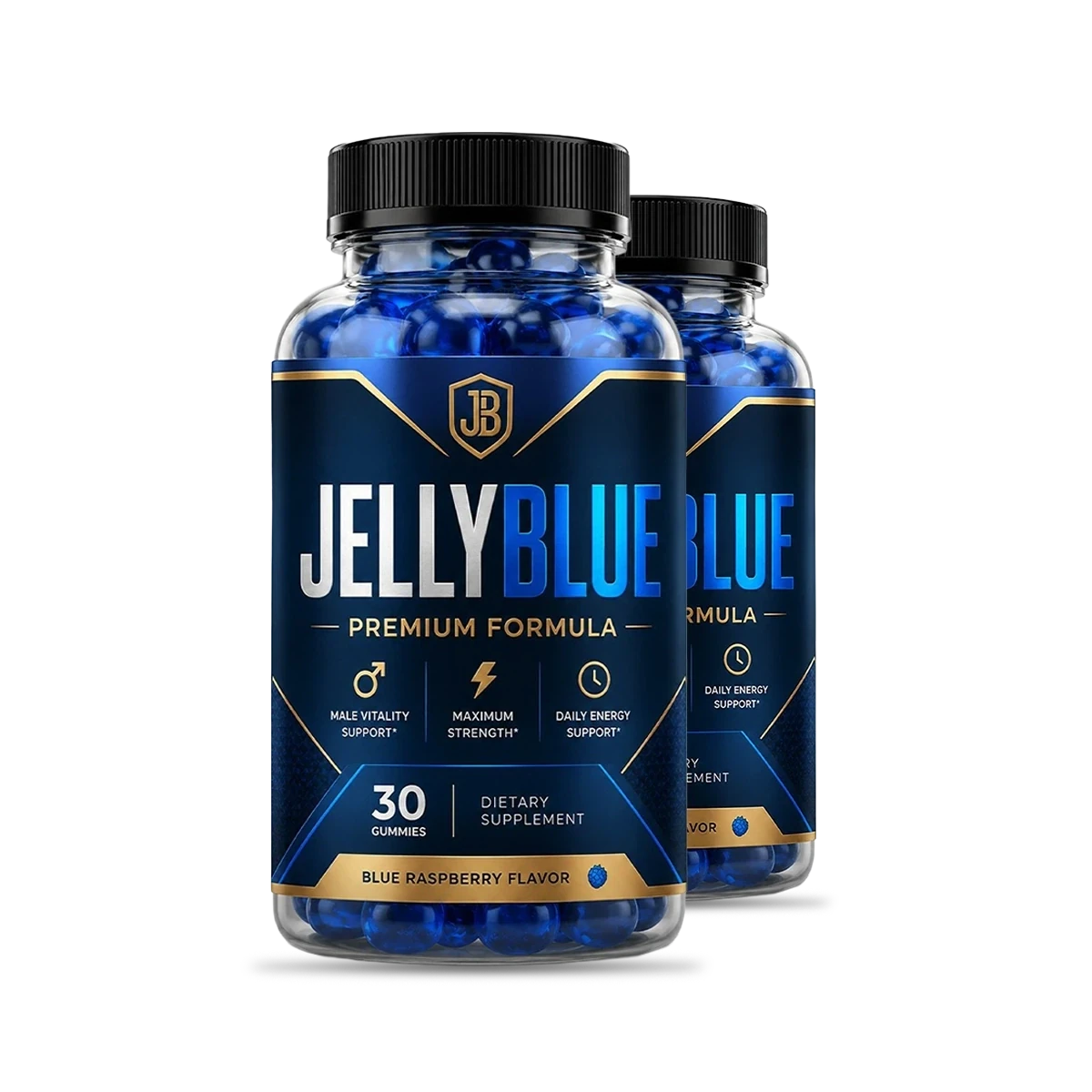
“Do not exceed recommended dose. Pregnant or nursing mothers, children under the age of 18 and individuals with a known medical condition should consult a physician before using this or any dietary supplement. Keep out of reach of children. Do not use if safety seal is damaged or missing.”
That paragraph is the manufacturer’s own and it is reproduced rather than summarised. Everything below it is this desk’s reading of what the seven named ingredients are known to do, with the source attached.
The one JellyBlue interaction worth a conversation
Three of the seven lines act on how wide a blood vessel sits, and they do it by three different routes. L-arginine is the substrate the body builds nitric oxide from. Beet root carries dietary nitrate, which reaches the same nitric oxide by a separate path. Grape seed acts on the vessel lining itself.
Three classes of medicine work on that same pathway deliberately. Nitrates prescribed for chest pain are nitric oxide donors. Several blood-pressure medicines lower pressure by relaxing vessels. PDE5 inhibitors extend the signal nitric oxide starts. Stack any of them with a product built on the same pathway and the effects add rather than cancel, and the result is a further fall in blood pressure.
At the amounts on this panel the addition is likely to be small: the arginine meta-analysis found its effect concentrated above four grams a day against 50 mg here, and the nitrate meta-analysis worked at roughly 300 to 500 mg of nitrate a day. Small is not zero, and this is the one place on this product where a specific, named conversation with a prescriber is worth more than any general caution.
Not whether a supplement is allowed. Whether adding a third small push on the nitric-oxide pathway to the two your prescription already provides is a sensible idea for your blood pressure. That is a five-minute question with a clear answer, and it is worth asking before the first gummy rather than after the third week.
The JellyBlue ingredient with a published safety signal
Ashwagandha, at 100 mg on this panel. A case series from Iceland and the US Drug-Induced Liver Injury Network documented liver injury in people taking ashwagandha products, and NCCIH carries the same signal in its own summary.
Three things are true about that at once and all three belong in the same paragraph. The cases are rare against very wide use. They involved products carrying far more ashwagandha than 100 mg, and several were of uncertain composition. And they are published, adjudicated and real, which is more than can be said for most supplement safety talk in either direction.
What follows is narrow. Anyone with liver disease or a history of drug-induced liver injury should leave this bottle alone. Everyone else should know that unexplained fatigue, dark urine or yellowing of the eyes is a reason to stop taking any supplement and get a liver panel, and that this is true of far more products than the ones that get written about.
The ordinary JellyBlue side effects, and the sugar
Digestive, mild, and mostly about the format
A chewable taken on an empty stomach twenty minutes before a meal is the commonest cause of a mild stomach complaint with a product like this. Taking it with food instead usually settles it, at the cost of the label’s preferred timing.
Sugar, in grams
1.5 g of total sugars and 2 g of total carbohydrate per gummy, at 6 calories. Negligible in a normal day. Not negligible if you are counting carbohydrate deliberately, and the figure is printed on the panel so you can count it.
Tongkat ali
The Natural Standard evidence review is the most careful summary of what has been reported, and the short version is that short-term use at studied amounts has been well tolerated in small trials. The trials are small, which is the real limit on that statement.
Beet root, harmlessly
Dietary nitrate from beetroot can colour urine and stool pink or red. It is called beeturia, it is harmless, and at 50 mg of extract it is very unlikely. It is worth knowing about because the alternative is a genuinely alarming half hour.
What nobody can tell you about JellyBlue
No safety study of these seven ingredients together at these amounts exists. What exists is a safety record for each name separately, and that is what this page is built from.
Absence of a combined study is not evidence of harm and it is not evidence of safety either. It is the ordinary state of the record for almost every multi-ingredient supplement on the market, and it is the reason the label’s own age limit and its caution paragraph are the operative instructions rather than anything this desk could add.
The best short account of how to weigh that is NCCIH’s guidance on using dietary supplements wisely, and the NIH consumer sheet sets out what a supplement label is and is not required to tell you.
Who publishes this JellyBlue safety page?
- Shiraseb F, Asbaghi O, Bagheri R, Wong A, Figueroa A, Mirzaei K. Effect of l-Arginine Supplementation on Blood Pressure in Adults: A Systematic Review and Dose-Response Meta-analysis of Randomized Clinical Trials. Adv Nutr. 2022;13(4):1226-1242. PMID 34967840. https://pubmed.ncbi.nlm.nih.gov/34967840/
- Ashor AW, Lara J, Siervo M. Medium-term effects of dietary nitrate supplementation on systolic and diastolic blood pressure in adults: a systematic review and meta-analysis. J Hypertens. 2017;35(7):1353-1359. PMID 28319596. https://pubmed.ncbi.nlm.nih.gov/28319596/
- Björnsson HK, Björnsson ES, Avula B, Khan IA, Jonasson JG, Ghabril M, Hayashi PH, Navarro V. Ashwagandha-induced liver injury: A case series from Iceland and the US Drug-Induced Liver Injury Network. Liver Int. 2020;40(4):825-829. PMID 31991029. https://pubmed.ncbi.nlm.nih.gov/31991029/
- National Center for Complementary and Integrative Health. Ashwagandha: What You Need To Know. NIH, accessed September 2026. https://www.nccih.nih.gov/health/ashwagandha
- Ulbricht C, Conquer J, Flanagan K, Isaac R, Rusie E, Windsor RC. An evidence-based systematic review of tongkat ali (Eurycoma longifolia) by the Natural Standard Research Collaboration. J Diet Suppl. 2013;10(1):54-83. PMID 23419023. https://pubmed.ncbi.nlm.nih.gov/23419023/
- National Center for Complementary and Integrative Health. Using Dietary Supplements Wisely. NIH, accessed September 2026. https://www.nccih.nih.gov/health/using-dietary-supplements-wisely
- NIH Office of Dietary Supplements. Dietary Supplements: What You Need to Know. Accessed September 2026. https://ods.od.nih.gov/factsheets/WYNTK-Consumer/
- MedlinePlus. Dietary Supplements. US National Library of Medicine, accessed September 2026. https://medlineplus.gov/dietarysupplements.html
- Foshati S, Nouripour F, Sadeghi E, Amani R. The effect of grape (Vitis vinifera) seed extract supplementation on flow-mediated dilation, blood pressure, and heart rate: A systematic review and meta-analysis of controlled trials with duration- and dose-response analysis. Pharmacol Res. 2022;175:105905. PMID 34798267. https://pubmed.ncbi.nlm.nih.gov/34798267/
Order JellyBlue with the caution read first
Seven printed amounts, no stimulant, and one interaction worth naming. 60 days from purchase if it does not suit you.
Price at the seller’s checkout · 60-day money-back guarantee from purchase
Order JellyBlue From This DeskLot JEL-26/JE-3218 · one gummy a day, 30 to a bottle · ships from the United States