JellyBlue Official Website › Ingredients
IngredientsJellyBlue Ingredients: All Seven, With The Amount Beside Each
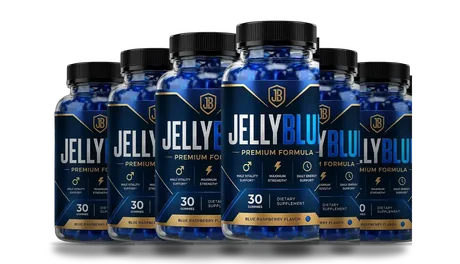
The JellyBlue panel prints seven actives with a milligram figure beside every one: Tongkat Ali 200 mg, maca root 100 mg, ashwagandha 100 mg, horny goat weed 100 mg, then L-arginine HCl, beet root and grape seed at 50 mg each. That is 650 mg a gummy. The advertising names six of the seven.
One page, seven lines, and for each one the amount this gummy carries set beside the amount the published trials actually used.
The whole JellyBlue panel in one table
| Ingredient | Latin name | Per gummy | What it is |
|---|---|---|---|
| Tongkat Ali | Eurycoma longifolia | 200 mg | root extract |
| Maca Root | Lepidium meyenii | 100 mg | root extract |
| Ashwagandha | Withania somnifera | 100 mg | root extract |
| Horny Goat Weed | Epimedium sagittatum | 100 mg | aerial parts extract |
| L-Arginine HCl | — | 50 mg | amino acid salt |
| Beet Root | Beta vulgaris | 50 mg | root extract |
| Grape Seed | Vitis vinifera | 50 mg | seed extract |
Transcribed from the printed container on 20 September 2026. Total actives 650 mg per gummy.
The vendor’s own graphics name 6 ingredients and one of them carries the footer “six named ingredients”. The printed panel names 7. The extra line is beet root extract at 50 mg, sitting between horny goat weed and grape seed. This is not a small discrepancy dressed up as a big one: beet root is the nitrate source, and of the seven it has the largest randomised literature behind its mechanism. The panel is the regulated statement on the container you receive, so the panel is what this page prints.
Each JellyBlue ingredient, and what was actually tested
Seven cards, in the order the container prints them. Each one names the study, the amount that study used, and where the two numbers part company.
Tongkat Ali
Eurycoma longifolia200 mgThe largest line on the panel at 200 mg, and the one with the most clinical record behind it. A 2022 meta-analysis of clinical trials reported an increase in serum total testosterone with standardised water extracts, and a separate meta-analysis looked at erectile function specifically. The trial worth holding in mind is the six-month randomised one in older men with androgen deficiency, which used 200 mg a day: the same number this gummy prints. That is the single point on this panel where the label and the literature meet exactly.
What that does not establish is that a gummy carrying 200 mg alongside six other things behaves like 200 mg of the extract those trials used. Extracts are standardised differently, the trials ran for months, and none of them tested this product. The Natural Standard evidence review is the most careful summary of what is and is not known.
Maca Root
Lepidium meyenii100 mg100 mg, against the 1.5 to 3 g a day the reviewed trials used. That is the largest single gap on this panel and it should be read as one.
The reason maca is here anyway is a genuinely interesting result. The 2002 randomised trial found an increase in self-reported sexual desire with no change in serum testosterone at all, which rules out the explanation the category usually reaches for and leaves the mechanism open. A later randomised trial in men with mild erectile dysfunction reported improvement on a standard questionnaire, and the systematic review of the whole literature calls the evidence suggestive and the trial count small. All of that is true at grams a day. At 100 mg it is context, not a promise.
Ashwagandha
Withania somnifera100 mg100 mg of root extract. The published record here is not about vitality at all: it is about stress, anxiety and sleep. A 2024 meta-analysis pooled trials of 125 to 600 mg a day on stress and anxiety, and a separate meta-analysis looked at sleep, mostly at 600 mg. There is also a male-fertility review and a 2026 meta-analysis of hormonal outcomes.
That is a reasonable thing to put in a daily vitality gummy, because sleep and stress act on how a day feels before anything else does. It is also six times less than most of those arms used. The safety note matters more than the dose note: a case series from Iceland and the US DILI Network documented liver injury linked to ashwagandha, and NCCIH summarises the same signal. Rare, real, and the reason anyone with liver disease should skip this bottle.
Horny Goat Weed
Epimedium sagittatum100 mg100 mg of Epimedium sagittatum. The active people mean when they name it is icariin, and the reason it sits in a male-vitality formula is a laboratory finding: icariin derivatives inhibit human PDE5 in an assay, the same enzyme the prescription drugs in this category block.
That sentence has to be read carefully, and this desk would rather write the careful version than the exciting one. An assay is glassware. The potency reported for icariin is orders of magnitude below the licensed drugs, the modified derivatives in that work are not what is in a plant extract, and no randomised trial in men supports the leap. The review of plant-derived PDE5 inhibitors is honest about exactly that distance. Horny goat weed is on this panel because it is traditional in the category, and the laboratory work is interesting rather than conclusive.
L-Arginine HCl
50 mg50 mg, and this is the line where the arithmetic is bluntest. L-arginine is the direct substrate for nitric oxide, so the mechanism is not in dispute. The dose-response meta-analysis of oral arginine and blood pressure pooled trials from 4 g to 24 g a day and found the effect concentrated at the upper end. 50 mg is eighty times below the bottom of that range.
Printed honestly, 50 mg of arginine is a nod to a pathway rather than a dose of it. What makes it less pointless than it looks is the company it keeps: beet root reaches the same nitric oxide from the nitrate side and grape seed acts on the vessel lining. Whether three small pushes on one pathway add to anything is not known, and this website does not assert that they do.
Beet Root
Beta vulgaris50 mg50 mg of Beta vulgaris extract, and the whole reason this website exists in the shape it does. This line is printed on the Supplement Facts panel and appears on none of the advertising the vendor ships.
Beetroot is the food source of dietary nitrate. Mouth bacteria reduce nitrate to nitrite and the body carries that on to nitric oxide, which is the signal that relaxes a vessel wall. The meta-analysis of medium-term dietary nitrate found a measurable fall in systolic blood pressure at roughly 300 to 500 mg of nitrate a day, and the NIH fact sheet for health professionals treats nitrate as one of the few performance ingredients with real support. Of the seven names on this panel, this is the one with the largest randomised literature behind its mechanism.
50 mg of extract is a long way from 500 mg of nitrate, and the panel does not say how much nitrate the extract carries. Both of those are true. So is the fact that the marketing omitted the most defensible name on its own label.
Grape Seed
Vitis vinifera50 mg50 mg of Vitis vinifera seed extract, the source of the proanthocyanidins used in most of the published work. A 2022 meta-analysis pooled controlled trials at 100 to 800 mg a day and measured flow-mediated dilation, which is a direct reading of how well an artery widens, alongside blood pressure and heart rate.
50 mg sits below the bottom of that range, and the honest description of this line is that it is the third small push on the same vessel-width pathway as arginine and beet root rather than a dose in its own right. It is also, like the other six, printed with a number, which is what allows any of this to be checked at all.
What the JellyBlue amounts look like against the trials
One line matches, six do not, and three are far below. That comparison is printed here once and is not repeated as an aside through the rest of the website, because a page that restates its own caveat in every paragraph stops being information and becomes an argument.
The useful conclusion is about how to test it rather than whether to buy it. A gummy at these amounts is not going to announce itself in week one. Give it the 60-day window, write down what you notice, and use the timeline as the measuring stick.
What is in a JellyBlue gummy besides the actives
The other-ingredients line reads: cane sugar, glucose syrup, water, pectin, citric acid, sodium citrate, natural flavor, natural coloring, starch. That is the gummy itself, and it is why a serving carries 6 calories, 2 g of carbohydrate and 1.5 g of total sugars.
Pectin rather than gelatine is worth a sentence, because it is what the vegetarian mark on the pack rests on. Cane sugar and glucose syrup are the sweetness. The natural colouring is what makes a blue raspberry gummy blue. Nothing in that list is an active and nothing in it is hidden; the full panel, both halves, is on the Supplement Facts page.
What is not in JellyBlue
- No caffeine, and no other stimulant. The panel would have to name one.
- No proprietary blend. Every active has its own number rather than sharing a total with six others.
- No prescription drug. That sentence is only worth writing because a published analysis found synthetic PDE5 inhibitors inside herbal products sold in this category, and the FDA keeps a public list. A full panel is not proof of what is in a gummy, but a proprietary blend removes the question entirely and this label does not.
- No dairy and no gluten, according to the marks the vendor ships. What each of those marks means, and who issued it, is set out on testing & quality.
- No claim of a clinical trial on this product. None exists, and none is implied anywhere on this website.
Who publishes this JellyBlue ingredients page?
- Leisegang K, Finelli R, Sikka SC, Panner Selvam MK. Eurycoma longifolia (Jack) Improves Serum Total Testosterone in Men: A Systematic Review and Meta-Analysis of Clinical Trials. Medicina (Kaunas). 2022;58(8). PMID 36013514. https://pubmed.ncbi.nlm.nih.gov/36013514/
- Kotirum S, Ismail SB, Chaiyakunapruk N. Efficacy of Tongkat Ali (Eurycoma longifolia) on erectile function improvement: systematic review and meta-analysis of randomized controlled trials. Complement Ther Med. 2015;23(5):693-8. PMID 26365449. https://pubmed.ncbi.nlm.nih.gov/26365449/
- Leitão AE, Vieira MCS, Pelegrini A, da Silva EL, Guimarães ACA. A 6-month, double-blind, placebo-controlled, randomized trial to evaluate the effect of Eurycoma longifolia (Tongkat Ali) and concurrent training on erectile function and testosterone levels in androgen deficiency of aging males (ADAM). Maturitas. 2021;145:78-85. PMID 33541567. https://pubmed.ncbi.nlm.nih.gov/33541567/
- Ulbricht C, Conquer J, Flanagan K, Isaac R, Rusie E, Windsor RC. An evidence-based systematic review of tongkat ali (Eurycoma longifolia) by the Natural Standard Research Collaboration. J Diet Suppl. 2013;10(1):54-83. PMID 23419023. https://pubmed.ncbi.nlm.nih.gov/23419023/
- Gonzales GF, Córdova A, Vega K, Chung A, Villena A, Góñez C, Castillo S. Effect of Lepidium meyenii (MACA) on sexual desire and its absent relationship with serum testosterone levels in adult healthy men. Andrologia. 2002;34(6):367-72. PMID 12472620. https://pubmed.ncbi.nlm.nih.gov/12472620/
- Zenico T, Cicero AF, Valmorri L, Mercuriali M, Bercovich E. Subjective effects of Lepidium meyenii (Maca) extract on well-being and sexual performances in patients with mild erectile dysfunction: a randomised, double-blind clinical trial. Andrologia. 2009;41(2):95-9. PMID 19260845. https://pubmed.ncbi.nlm.nih.gov/19260845/
- Shin BC, Lee MS, Yang EJ, Lim HS, Ernst E. Maca (L. meyenii) for improving sexual function: a systematic review. BMC Complement Altern Med. 2010;10:44. PMID 20691074. https://pubmed.ncbi.nlm.nih.gov/20691074/
- Arumugam V, Vijayakumar V, Balakrishnan A, Bhandari RB, Boopalan D, Ponnurangam R, Sankaralingam Thirupathy V, Kuppusamy M. Effects of Ashwagandha (Withania Somnifera) on stress and anxiety: A systematic review and meta-analysis. Explore (NY). 2024;20(6):103062. PMID 39348746. https://pubmed.ncbi.nlm.nih.gov/39348746/
- Cheah KL, Norhayati MN, Husniati Yaacob L, Abdul Rahman R. Effect of Ashwagandha (Withania somnifera) extract on sleep: A systematic review and meta-analysis. PLoS One. 2021;16(9):e0257843. PMID 34559859. https://pubmed.ncbi.nlm.nih.gov/34559859/
- Durg S, Shivaram SB, Bavage S. Withania somnifera (Indian ginseng) in male infertility: An evidence-based systematic review and meta-analysis. Phytomedicine. 2018;50:247-256. PMID 30466985. https://pubmed.ncbi.nlm.nih.gov/30466985/
- Fornalik M, Malkiewicz A, Adamczak D, Nawrocki F, Zielinska A, Mondal SA. Hormonal Modulation with Withania somnifera: Systematic Review and Meta-Analysis of Randomized-controlled Trials. Planta Med. 2026;92(8):790-805. PMID 41740946. https://pubmed.ncbi.nlm.nih.gov/41740946/
- Björnsson HK, Björnsson ES, Avula B, Khan IA, Jonasson JG, Ghabril M, Hayashi PH, Navarro V. Ashwagandha-induced liver injury: A case series from Iceland and the US Drug-Induced Liver Injury Network. Liver Int. 2020;40(4):825-829. PMID 31991029. https://pubmed.ncbi.nlm.nih.gov/31991029/
- Dell'Agli M, Galli GV, Dal Cero E, Belluti F, Matera R, Zironi E, Pagliuca G, Bosisio E. Potent inhibition of human phosphodiesterase-5 by icariin derivatives. J Nat Prod. 2008;71(9):1513-7. PMID 18778098. https://pubmed.ncbi.nlm.nih.gov/18778098/
- Anand Ganapathy A, Hari Priya VM, Kumaran A. Medicinal plants as a potential source of Phosphodiesterase-5 inhibitors: A review. J Ethnopharmacol. 2021;267:113536. PMID 33137431. https://pubmed.ncbi.nlm.nih.gov/33137431/
- Shiraseb F, Asbaghi O, Bagheri R, Wong A, Figueroa A, Mirzaei K. Effect of l-Arginine Supplementation on Blood Pressure in Adults: A Systematic Review and Dose-Response Meta-analysis of Randomized Clinical Trials. Adv Nutr. 2022;13(4):1226-1242. PMID 34967840. https://pubmed.ncbi.nlm.nih.gov/34967840/
- Ashor AW, Lara J, Siervo M. Medium-term effects of dietary nitrate supplementation on systolic and diastolic blood pressure in adults: a systematic review and meta-analysis. J Hypertens. 2017;35(7):1353-1359. PMID 28319596. https://pubmed.ncbi.nlm.nih.gov/28319596/
- Foshati S, Nouripour F, Sadeghi E, Amani R. The effect of grape (Vitis vinifera) seed extract supplementation on flow-mediated dilation, blood pressure, and heart rate: A systematic review and meta-analysis of controlled trials with duration- and dose-response analysis. Pharmacol Res. 2022;175:105905. PMID 34798267. https://pubmed.ncbi.nlm.nih.gov/34798267/
- Campbell N, Clark JP, Stecher VJ, Thomas JW, Callanan AC, Donnelly BF, Goldstein I, Kaminetsky JC. Adulteration of purported herbal and natural sexual performance enhancement dietary supplements with synthetic phosphodiesterase type 5 inhibitors. J Sex Med. 2013;10(7):1842-9. PMID 23634714. https://pubmed.ncbi.nlm.nih.gov/23634714/
- US Food and Drug Administration. Tainted Sexual Enhancement Products. Medication Health Fraud, accessed September 2026. https://www.fda.gov/drugs/medication-health-fraud/tainted-sexual-enhancement-products
- National Center for Complementary and Integrative Health. Ashwagandha: What You Need To Know. NIH, accessed September 2026. https://www.nccih.nih.gov/health/ashwagandha
- NIH Office of Dietary Supplements. Dietary Supplements for Exercise and Athletic Performance: Fact Sheet for Health Professionals. Accessed September 2026. https://ods.od.nih.gov/factsheets/ExerciseAndAthleticPerformance-HealthProfessional/
Order JellyBlue with the panel in front of you
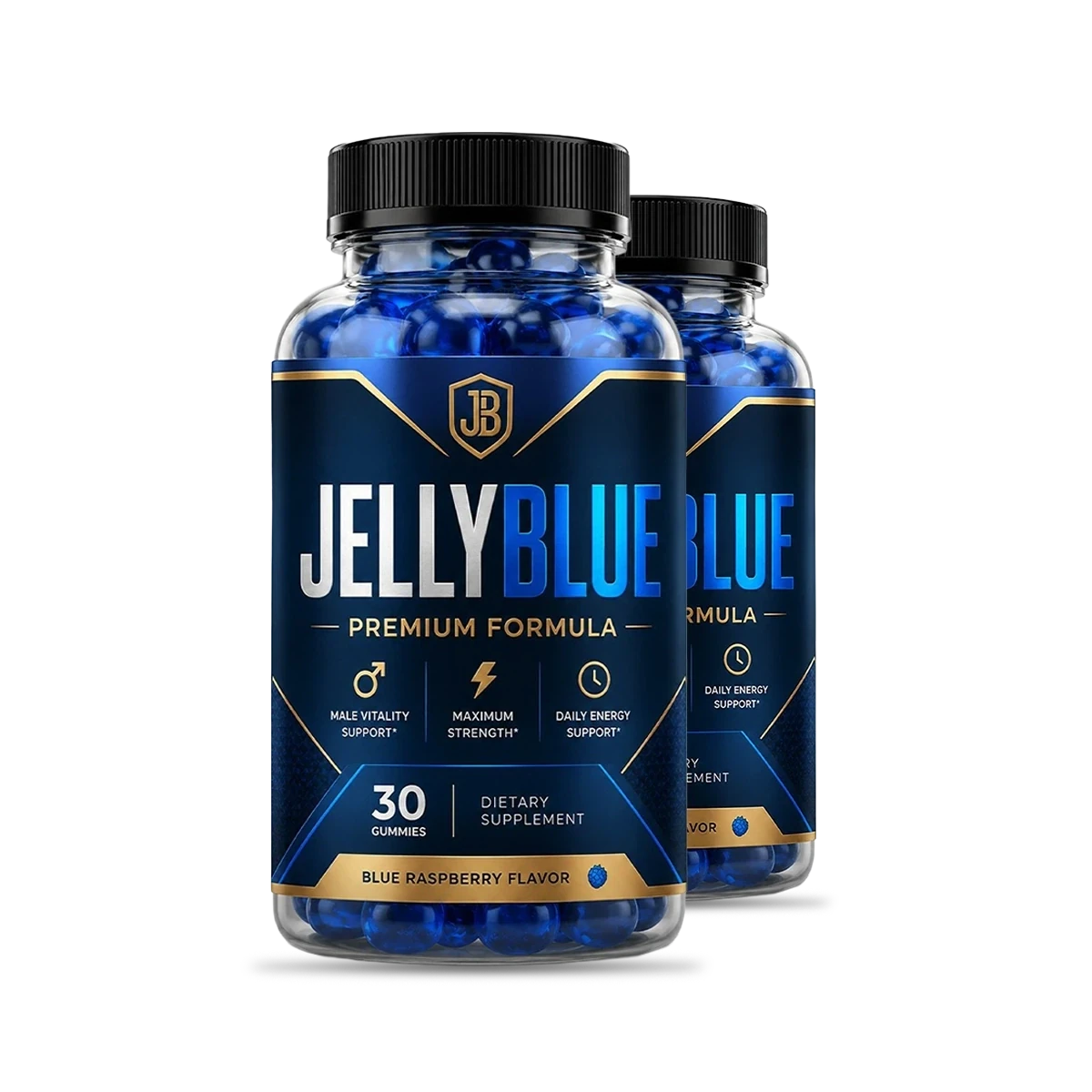
Seven actives, 650 mg, every figure printed on the container and reproduced above. Two bottles covers the 60-day window.
Price at the seller’s checkout · 60-day money-back guarantee from purchase
Order JellyBlue From This DeskLot JEL-26/JE-3218 · one gummy a day, 30 to a bottle · ships from the United States