JellyBlue Official Website › Review standards
Review standardsJellyBlue Review Standards: How Every Page Here Is Checked
Every JellyBlue page on jellyeblue.com starts from the printed label, adds the seller’s published terms and checks each health statement against NIH, FDA or peer-reviewed sources. Dr. Landon Trost, MD, a physician, reviews the pages for medical accuracy. Jellyeblue earns when you order, so these standards are written down where you can hold the site to them.
Who writes and reviews each page, the order sources are checked in, the claims the site will not make, how its numbers are labeled and how errors are fixed.
By the JellyBlue Team at Jellyeblue · Medical review: Dr. Landon Trost, MD · Revised
Who writes the JellyBlue pages on jellyeblue.com
Jellyeblue is a U.S. authorized JellyBlue merchant based in New York. It holds stock, takes orders through the order buttons on this site and ships from the United States. It did not formulate JellyBlue and does not manufacture it: the label names Gex Corporation LLP of Ogden, Utah as the distributor of record.
The words on these pages come from the JellyBlue Team at Jellyeblue. The team reads the bottle artwork line by line, compares it with the seller’s material, looks up each ingredient in public research and writes the page in plain English. The same team answers the website inbox listed in the footer, which handles corrections, privacy questions and press.
Before a page goes live, Dr. Landon Trost, MD, a physician, reviews it for medical accuracy. Their name appears near the top of every page, again in the page credits at the bottom, and on the about page, which describes what the review covers.
The order in which JellyBlue facts are checked
Every fact on this site comes from one of five places. When two of them disagree, the higher one wins and the disagreement is stated on the page.
- The printed bottle. The Supplement Facts panel, the suggested use, the storage line, the caution paragraph and the distributor block, transcribed from the label artwork. The panel lists seven actives, starting with L-Arginine HCl at 50 mg, and the site follows the panel rather than any shorter list.
- The seller’s published terms. Pack sizes of two, three and six bottles, the 60-day guarantee counted from purchase, the returns address and the refund steps. Prices are set at the seller’s checkout and are not printed here.
- U.S. government health sources. The NIH Office of Dietary Supplements, the National Center for Complementary and Integrative Health, MedlinePlus, NIDDK and the FDA.
- Peer-reviewed research. Trials and reviews of each ingredient, cited by their PubMed record so the title, authors and year can be checked against the sentence that uses them.
- The seller’s marketing images. Phrases such as “six named ingredients” or “doctor developed” are quoted as the seller’s wording, never repeated as a finding of this site.
A fact that none of these sources gives is called “not published”. The site does not estimate a price, a nitrate content or a review it has not seen.
Five steps every JellyBlue page passes through
Transcribe
The writer copies the lines the page needs straight from the label artwork: amounts, serving size, directions and cautions, word for word where they are quoted.
Source
Every sentence about what an ingredient does links to the study or the government page it rests on, in the sentence itself and in the reference list.
Compare
Where a trial used a different amount from the gummy, both figures are printed together so the reader can weigh them, and that comparison lives in one clearly named section.
Medical review
Dr. Landon Trost, MD reads the draft for accuracy and for safety notes that fit this formula: nitrates and blood-pressure medicine, heart conditions, new erection problems, and ashwagandha with liver or thyroid conditions.
Publish and date
The page goes live with the writer, the reviewer and the revision date shown, and the same date is given to search engines in the page’s structured data.
What the JellyBlue medical review covers, and what it does not
The review covers the product copy, the label transcription, the ingredient, side-effect and suitability pages, the answers in every FAQ and each journal post. It asks three questions of each page. Does it match the label? Does it match the sources it cites? Are its safety notes right for a general adult reader?
A medical review is not a consultation and not a recommendation to buy JellyBlue. It cannot account for your history, your blood pressure or the medicines you take. That is why the pages send you to your own doctor or pharmacist before the first gummy, and why this site never suggests changing, stopping or replacing a prescription.
When the label, the guarantee or a safety source changes, the affected page goes back through the review and its revision date moves forward. The September 30, 2026 revision was the most recent full pass.
The JellyBlue claims ceiling: three phrases from the bottle
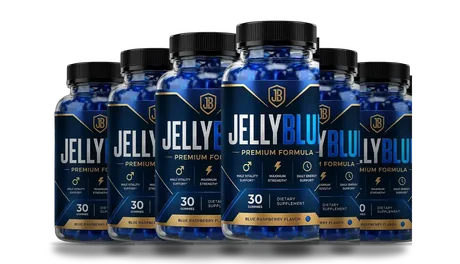
The front of the bottle prints three phrases: Male Vitality Support, Maximum Strength and Daily Energy Support. Those are the only benefits this site states for the product, and the FDA statement in every footer applies to each of them.
- No page says JellyBlue raises testosterone, treats erectile dysfunction, improves fertility or works like a prescription medicine. The label does not say so, and no trial of this formula exists.
- Research on an ingredient is described as research on that ingredient, at the amount the study used, never as a result the gummy inherits.
- No page promises a result by a date. Where a timeline appears, it reports what buyers describe and labels it as such.
- No page calls JellyBlue or its factory FDA approved. A registered facility is a factory on an FDA list; no dietary supplement is FDA-approved (FDA questions and answers).
These limits follow the FTC’s health products compliance guidance, which expects health claims to rest on competent and reliable scientific evidence.
How JellyBlue numbers on this site are labeled
Several figures on these pages are not facts about the formula, and each one says so where it appears.
- The 4.8 average from 975 written reviews and the 6,343 orders. These are the seller-supplied summary of this desk’s order book. They are labeled as that summary, they are not audited, and they are not evidence about the gummy. No star rating is added to the site’s structured data.
- The editorial score of 6 out of 10. A checklist score for the label and the buying terms, with each criterion shown beside its score. It rates disclosure and terms, not how the gummy will work for you.
- Trial amounts. Read from the abstracts of the cited papers; where a paper reports a range, the range is printed.
- Cost per day. Not calculated, because no price is published to this desk. The pricing page shows how to work it out from the checkout total.
JellyBlue safety topics handled the same way on every page
A gummy built around nitric-oxide ingredients and ashwagandha raises a few questions that deserve the same answer wherever they come up:
- Nitrates, PDE5 medicines and blood-pressure tablets. Three ingredients act on blood-vessel width, so anyone taking these medicines speaks to the prescriber first.
- New erection problems. Treated as a reason for a check-up, because they can signal blood vessel disease, high blood pressure or diabetes (NIDDK).
- Ashwagandha. Rare liver injury, thyroid and autoimmune conditions, surgery, pregnancy and several medicine interactions, as listed by NCCIH.
- Undeclared drugs in this category. The FDA keeps a public list of sexual enhancement products found to contain hidden drug ingredients; the site explains why a fully printed panel matters, without claiming that a label proves what is inside a bottle.
- Reactions. Stop, call a doctor and, if you wish, report it through FDA MedWatch.
How Jellyeblue earns from JellyBlue orders
Jellyeblue earns money when you order through the buttons on this site. Those buttons lead to the seller’s own checkout, they are marked as sponsored links, and the price you pay is the one that checkout shows.
That income is the reason these standards are published. The same doses, cautions and unknowns appear on every page whether or not they help a sale, and the pricing page still suggests starting with a smaller pack.
JellyBlue corrections and revision dates
Every page shows its revision date near the top and in the page credits, and the structured data carries the same date. The date moves when the page changes: a label update, a corrected fact, a new source or a fresh medical review.
To report an error, write to the website inbox listed in the site footer with the page address and the line that looks wrong. A photo of your bottle’s label or a link to a source helps. The team checks the point against the label and the source, fixes a confirmed error on the page where it appears and moves the revision date forward. Order and refund questions go to the order desk instead, because the website inbox cannot see orders.
Changes made in the September 30, 2026 revision:
- The named medical reviewer from the vendor’s pack now appears on every page, and older lines saying the site had no named reviewer were corrected.
- The Supplement Facts table now follows the label’s own order, with L-Arginine HCl first, and pages that described the ingredient list as following the container’s order were reworded.
- Phone numbers and email addresses moved to the site footer, and the contact page keeps the full list.
- A doctor-first section was added to the disclaimer page.
JellyBlue review standards: six questions
Does the medical review mean a doctor recommends JellyBlue?
No. The review checks that a page is accurate and that its safety notes suit a general adult reader. It is not a recommendation to buy and not advice about your own health.
Is Jellyeblue the company that makes JellyBlue?
No. Jellyeblue is a U.S. authorized merchant that sells and explains the product. The label names Gex Corporation LLP of Ogden, Utah as the distributor of record.
Why does this site list seven ingredients when the ads show six?
Because the printed Supplement Facts panel lists seven, and the panel is the first source on this site. Beet root extract at 50 mg is the line the seller’s ingredient artwork does not show.
Where do the JellyBlue health facts come from?
From NIH, NCCIH, MedlinePlus, NIDDK and FDA pages and from peer-reviewed studies, each linked in the sentence that uses it.
Why is no price printed on these pages?
The seller sets pack prices at its own checkout, and that screen shows the total before you pay. Printing a figure here would risk showing a number the checkout no longer uses.
What happens after I report a mistake?
The team checks it against the label and the cited source. If the page is wrong, it is corrected where the error appears and the revision date moves forward.