Home › Blog › How Stress Affects Men’s Libido & Energy
Symptoms & LifestyleHow Stress Affects Men’s Libido & Energy (and How to Reset It)
| The topic | How stress affects men’s libido and energy — and the daily reset that helps. |
| The mechanism | Chronic stress keeps the body in fight-or-flight, raises cortisol, disrupts sleep and works against testosterone. |
| The reset | Protect sleep, move daily, build in real downtime, guard connection, and consider calming adaptogens. |
| Timeline | Many men feel steadier within a few weeks. Persistent stress warrants professional help. Individual results vary. |

Ask most men what has changed since their drive and energy were at their peak, and the honest answer is usually one word: stress. Deadlines, money, family, health, a phone that never stops — the modern load rarely lets up. And while a burst of short-term stress is normal and even useful, the chronic, low-grade kind quietly drains two of the things men value most. Understanding exactly how stress affects men’s libido and energy makes it much easier to do something about it. This guide covers the biology in plain language, the warning signs to watch for, and a practical daily reset you can start today.
The biology: fight-or-flight vs. desire
Your body has an ancient survival system. When it senses a threat, it floods you with stress hormones, sharpens your focus and diverts resources toward immediate survival — and away from anything it considers non-essential in a crisis, including digestion, recovery and sex drive. That is a brilliant response to a genuine emergency. The problem is that a stack of emails, a tight budget and a bad night’s sleep trigger the same machinery. When the threat never fully switches off, your body stays in a low-level fight-or-flight state, and desire is one of the first things it sets aside.
The cortisol-testosterone connection
Cortisol is the body’s main stress hormone, and it is essential in the right amounts. But when chronic stress keeps it elevated for weeks and months, it is associated with a less favourable environment for testosterone activity — the two hormones tend to move in opposite directions. Since testosterone is a major driver of male libido, energy, mood and motivation, a sustained tilt toward cortisol can flatten all of them at once. This is a big part of why chronically stressed men so often describe feeling “flat,” low on drive and hard to motivate. It also overlaps with the signs of low testosterone in men, which is why the two can be hard to tell apart without a proper check-up.
Stress, sleep and the energy drain
Stress rarely stays in its lane. It bleeds into the night, making sleep lighter and more broken — and since much of the body’s natural testosterone activity and physical recovery happen during deep sleep, poor sleep compounds the problem. The result is the familiar “wired but tired” state: mentally frazzled, yet unable to properly rest. That vicious cycle — stress worsens sleep, poor sleep worsens stress tolerance — is one of the most common energy drains men face. We unpack the sleep half of that loop in how poor sleep affects male testosterone.
Warning signs stress is affecting your vitality
Stress creeps up gradually, so the signs are easy to normalise. A few to watch for:
- Noticeably less interest in sex, even when the opportunity is there.
- An afternoon energy crash that coffee no longer fixes.
- Feeling wired at night but exhausted in the morning.
- A shorter fuse, more irritability, and less patience than usual.
- Difficulty switching off or being present with your partner.
- Reaching more often for alcohol, sugar or caffeine to cope.
None of these is a diagnosis. But together they signal that the everyday inputs your vitality depends on need attention. If low drive is your main concern, our overview of what causes low libido in men puts stress in the wider context.
See the JellyBlue Daily Vitality Formula →
The daily stress reset
You cannot delete stress from a full life — but you can change how your body carries it. These are the highest-return habits.
Protect your sleep first
Sleep is where the body clears the day’s stress load. A consistent bedtime, a dark and cool room, and a wind-down routine without screens do more for stress resilience than almost anything else.
Move to discharge stress
Physical activity is one of the most effective ways to metabolise stress hormones. A brisk daily walk, a couple of strength sessions a week, or anything that gets you breathing harder all help — and they support circulation and mood at the same time.
Build in genuine downtime
Ten unhurried minutes of breathing, stretching, time in nature or simply doing nothing tells your nervous system the threat has passed. Small, regular resets beat one big blowout at the weekend.
Guard your connection
Stress crowds out closeness, and closeness is often where desire lives. Protecting unpressured time with your partner — conversation, affection, shared activities — helps rebuild both intimacy and drive.
Watch the crutches
Alcohol, excess caffeine and sugar all feel like relief in the moment but tend to worsen sleep and stress over time. Easing back on them removes a hidden drag on your recovery.
Where calming adaptogens fit
Alongside those habits, some botanicals have a long tradition of helping the body cope with stress. The best known is ashwagandha (Withania somnifera), an adaptogen traditionally used to help the body maintain a steadier, calmer response to everyday stress. When the stress response settles, sleep often improves — and better sleep is one of the biggest levers for both energy and drive. Adaptogens are daily support, not a substitute for the fundamentals above.

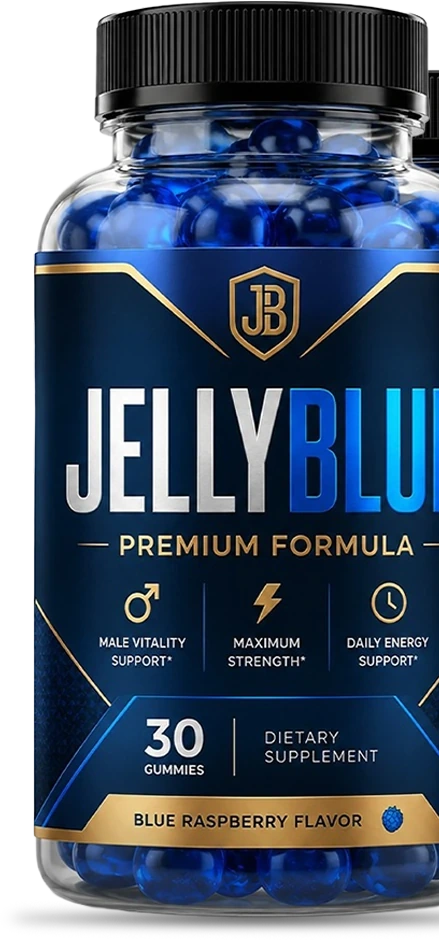
JellyBlue pairs ashwagandha with six other vitality actives — tongkat ali, maca, horny goat weed, L-arginine, beet root and grape seed — in one blue-raspberry gummy a day, with doses printed openly on the label. It is a simple way to support stress resilience and circulation together, on top of the habits that do the heavy lifting. For the full picture on the actives, see how to boost male vitality and energy naturally.

See JellyBlue Multi-Bottle Packages →
When to seek help
Everyday stress responds well to the reset above. But if stress feels overwhelming, unrelenting, or is affecting your health, relationships or ability to function, please talk to a doctor or mental-health professional. Persistent low mood, anxiety and burnout are real and treatable, and there is no prize for toughing them out alone. Nothing in this article is a substitute for professional advice.
Reset your stress, restore your spark
JellyBlue puts seven real vitality actives — including calming ashwagandha — into one easy daily gummy, backed by a 60-day money-back guarantee.
See JellyBlue PackagesFrequently asked questions
How does stress affect men’s libido?
Chronic stress keeps the body in a fight-or-flight state, which biologically deprioritises sex drive. Sustained stress is also associated with higher cortisol and lower testosterone activity, and it disrupts sleep — all of which pull libido downward. Reducing chronic stress is one of the most direct ways to support a healthy sex drive.
Can stress cause low energy and fatigue in men?
Yes. Ongoing stress taxes the nervous system, disrupts sleep and keeps the body on high alert, which is exhausting over time. Many men describe a wired-but-tired feeling: mentally frazzled yet unable to rest well. Addressing the stress usually improves the energy.
What is the cortisol-testosterone connection?
Cortisol is the body’s main stress hormone. When it stays elevated due to chronic stress, it is associated with a less favourable environment for testosterone activity. The two tend to move in opposite directions, which is part of why prolonged stress can flatten drive, mood and energy in men.
Do adaptogens like ashwagandha help with stress?
Ashwagandha is an adaptogen traditionally used to help the body maintain a steadier, calmer response to everyday stress. It is best used alongside the fundamentals — sleep, movement, downtime and connection — rather than as a standalone fix. Individual results vary.
How long does it take to reset from chronic stress?
There is no fixed timeline, but many men notice steadier energy and mood within a few weeks of protecting sleep, moving daily and building in genuine downtime. Deeper recovery from burnout can take longer. If stress is overwhelming or persistent, speak to a healthcare professional.
About the JellyBlue Research Team
The JellyBlue Research Team is an independent men’s-health content group that reviews traditional-use evidence and public health guidance to produce clear, practical, non-hyped reads on male vitality. We describe ingredients in terms of their traditional and general use, cite public sources, and always encourage readers to bring persistent symptoms to a qualified healthcare professional. We do not manufacture the product and we are not a medical provider.
References
- National Center for Complementary and Integrative Health (NCCIH). “Ashwagandha.” nccih.nih.gov
- American Psychological Association. “Stress effects on the body.” apa.org
- MedlinePlus, U.S. National Library of Medicine. “Stress and your health.” medlineplus.gov
- National Heart, Lung, and Blood Institute. “Sleep Deprivation and Deficiency.” nhlbi.nih.gov
† These statements have not been evaluated by the FDA. This product is not intended to diagnose, treat, cure or prevent any disease. This article is for general information only and is not medical advice. Individual results vary.