Home › Blog › What Causes Low Libido in Men?
Symptoms & CausesWhat Causes Low Libido in Men? Common Causes & Everyday Fixes
| The question | What causes low libido in men? Usually several everyday factors at once — not one single switch. |
| Biggest drivers | Poor sleep, chronic stress, a narrow diet, too little movement, and sluggish circulation. |
| What helps | Protect sleep, move daily, eat for blood flow, manage stress, and support the body with traditional vitality botanicals. |
| Timeline | Give consistent changes 30–90 days. See a doctor if libido drops suddenly. Individual results vary. |

If your interest in sex isn’t what it used to be, you are far from alone — and you are not imagining it. A dip in libido is one of the most common things men quietly worry about, and it rarely has a single, dramatic explanation. More often, low libido in men is the visible tip of several everyday factors stacking up at the same time: less sleep, more stress, a narrower diet, less movement and slower circulation. The encouraging part is that most of those inputs are things you can influence. This guide walks through what actually causes low sex drive in men, and the simple daily changes that tend to help the most.
What “low libido” really means
Libido is simply your baseline desire for sex — and like appetite, it naturally rises and falls. A quiet week after a stressful stretch at work is normal. What tends to worry men is a persistent, weeks-or-months-long drop from their own usual level, especially when it comes with less spark, less spontaneity or less confidence. Because desire sits at the crossroads of hormones, mood, circulation and relationship dynamics, it is unusually sensitive to how the rest of your life is going. That is exactly why the everyday causes below matter so much.
What causes low libido in men? The everyday drivers
When men ask what causes low libido, they often expect one culprit. In reality, the common causes overlap and reinforce each other. Here are the ones that show up again and again.
1. Chronic stress and burnout
Stress is arguably the most underrated libido killer. When your body is in a prolonged “fight or flight” state, it prioritises getting through the day over desire — biology treats sex as a low priority when it thinks you are under threat. Ongoing pressure at work or home keeps that stress response switched on, which quietly flattens drive and mood. We cover this in depth in our guide to how stress affects men’s libido and energy, but the short version is: an over-taxed nervous system and a healthy sex drive rarely coexist for long.
2. Poor or broken sleep
Sleep and sex drive are more connected than most men realise. A large share of the body’s natural testosterone activity happens during deep, uninterrupted sleep, so short or fragmented nights tend to leave you flatter the next day — in energy and in desire. If you routinely run on six hours or less, that alone can explain a good chunk of a libido dip. Our companion article on how poor sleep affects male testosterone unpacks why the two are so tightly linked.
3. A narrow, ultra-processed diet
What you eat feeds the systems that libido depends on — hormones, circulation and energy. Diets heavy in ultra-processed food, constant sugar and very little colour tend to work against all three. Over time, small nutrient gaps and sluggish blood flow can dull desire. The fix is not a crash diet but a steadier, more colourful plate, which we lay out in our guide to the best foods for male vitality and testosterone.
4. Too little movement
A sedentary routine works against libido on several fronts at once: it dampens circulation, nudges mood downward, and is associated with less favourable hormone patterns. You do not need to become an athlete — a mix of daily walking and two or three short strength sessions a week supports blood flow, mood and drive. Movement is one of the highest-return, lowest-cost changes you can make.

5. Sluggish circulation
Healthy desire and healthy blood flow are close companions. Circulation depends partly on nitric oxide, a molecule that helps blood vessels relax and widen. Habits that tax the cardiovascular system — smoking, excess alcohol, a sedentary routine, a poor diet — also tend to dull the circulatory foundation that a healthy libido relies on. Supporting blood flow is therefore one of the most practical levers you have.
6. Age-related hormone shifts
From roughly the mid-thirties onward, most men experience a slow, natural decline in testosterone activity. This is gradual and normal, not a cliff — but combined with the lifestyle factors above, it can tip a previously healthy drive into “not what it used to be” territory. Recognising the early signs helps; our guide to the signs of low testosterone in men covers what to watch for.
7. Mood, relationships and mental load
Desire is emotional as well as physical. Low mood, anxiety, unresolved relationship tension and sheer mental overload all pull directly on libido. Sometimes the most effective “treatment” for a flagging sex drive is an honest conversation, more shared downtime, or simply protecting connection time that has quietly disappeared from a busy life.
8. Alcohol, smoking and some medications
Heavy alcohol use and smoking both work against circulation and hormone balance over time. Certain prescription medications can also affect libido as a side effect. If your drive changed noticeably after starting a new medication, do not stop it on your own — raise it with your doctor, who can look at alternatives.
See the JellyBlue Daily Vitality Formula →
How to support a healthy libido, day to day
Because the causes overlap, the fixes do too — improving one area tends to lift the others. Here is where to put your energy.
- Protect your sleep. Aim for 7–9 hours with a consistent bedtime and a dark, cool room. This is the single highest-leverage change for both energy and desire.
- Move every day. Brisk walking plus a couple of short strength sessions each week supports circulation, mood and hormone health together.
- Eat for blood flow. Colourful vegetables, leafy greens, beets, healthy fats and adequate protein — and less ultra-processed food and constant sugar.
- Manage stress on purpose. Even ten minutes of walking, breathing or genuine downtime lowers the background load that erodes desire.
- Rebuild connection. Protect unhurried time with your partner. Desire often follows closeness rather than leading it.
- Consider traditional vitality botanicals. Ingredients used for generations to support male vitality can round out a healthy routine (more below).
Where traditional vitality botanicals fit
Certain botanicals have been used specifically to support male vitality and libido across centuries and cultures. They are best understood as daily support layered on top of the fundamentals — not a replacement for sleep, movement and nutrition.
- Maca root (Lepidium meyenii) — a Peruvian root prized for generations and traditionally associated with energy, endurance and a healthy libido.
- Tongkat ali (Eurycoma longifolia) — a Southeast-Asian root long used to support stamina, drive and male vitality.
- Horny goat weed (Epimedium sagittatum) — a botanical containing icariin, traditionally used to support performance and circulation.
- Ashwagandha (Withania somnifera) — an adaptogen traditionally used to help the body maintain a steadier response to everyday stress, which in turn supports sleep and drive.
- L-arginine and beet root — an amino acid and a nitrate-rich root that support the nitric-oxide pathway behind healthy circulation.

The practical challenge with any routine is consistency, which is where a once-daily format earns its place. JellyBlue puts seven of these vitality actives — tongkat ali, maca, ashwagandha, horny goat weed, L-arginine, beet root and grape seed — into a single blue-raspberry gummy, at doses printed openly on the label. No handful of capsules, no proprietary-blend mystery, no stimulants. For a fuller walkthrough of the actives, see our overview of how to boost male vitality and energy naturally.
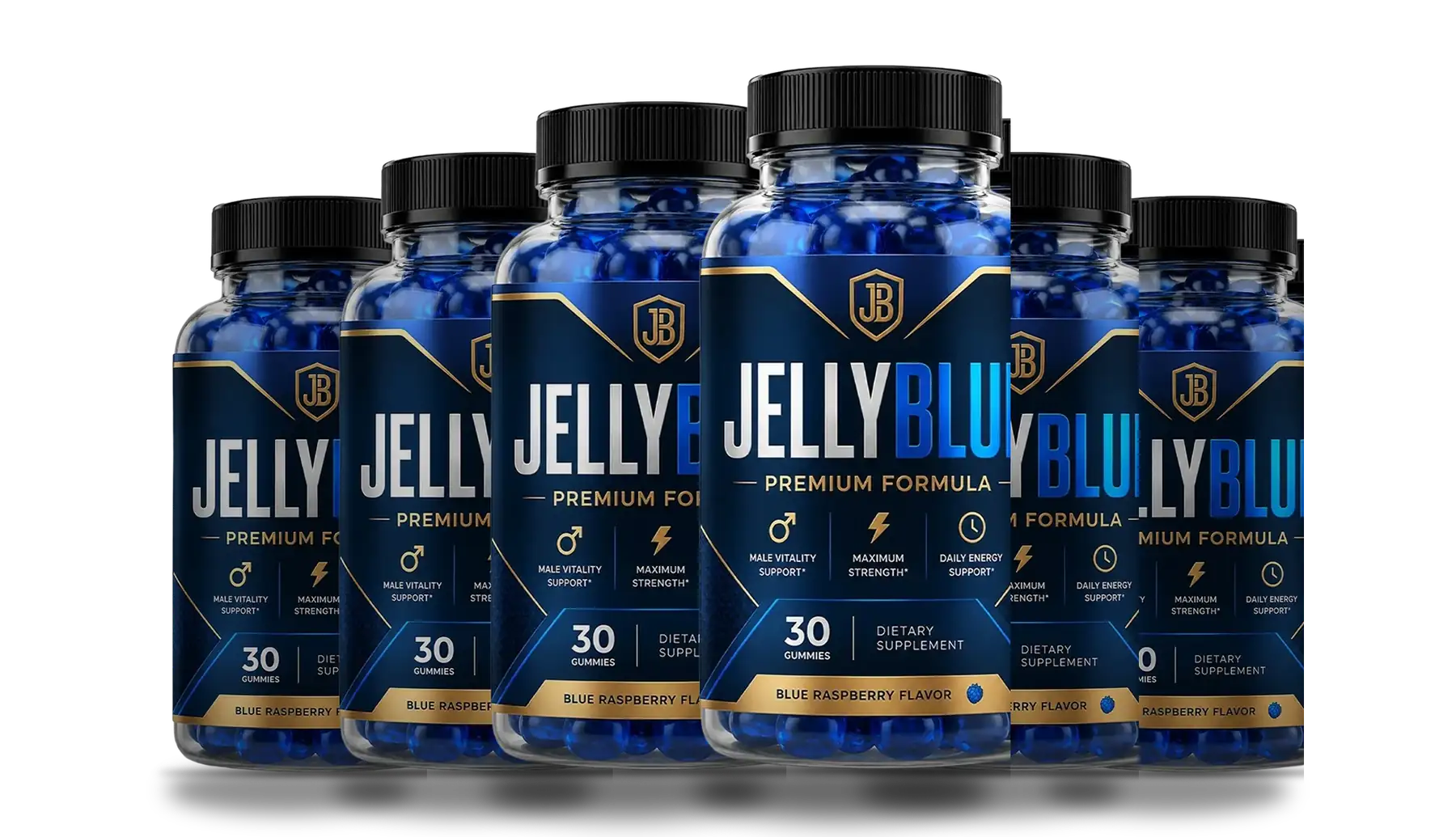
See JellyBlue Multi-Bottle Packages →
When to see a doctor
Lifestyle changes help most men, but libido is also a useful health signal. Speak to a doctor if your sex drive drops suddenly, does not recover after a fair trial of the changes above, comes with other symptoms, or is causing real distress in your relationship. Some medications and underlying conditions can affect desire, and a professional can help identify what is going on. Nothing in this article is a substitute for personalised medical advice.
Support your drive from the inside
JellyBlue puts seven real vitality actives into one easy daily gummy — backed by a 60-day money-back guarantee.
See JellyBlue PackagesFrequently asked questions
What is the most common cause of low libido in men?
There is rarely a single cause. For most men, low libido is the sum of several everyday factors stacking up at once — poor sleep, chronic stress, a narrow diet, too little movement and sluggish circulation. Because the drivers overlap, small improvements across all of them usually help more than fixing any one thing in isolation.
Can low libido in men fix itself with lifestyle changes?
Many men notice a meaningful difference when they protect their sleep, move daily, eat for healthy circulation and manage stress on purpose. These are the foundations of a healthy sex drive. If libido stays low despite consistent changes, or drops suddenly, it is worth speaking to a doctor to rule out an underlying cause.
Do libido-support botanicals like maca and tongkat ali work?
Maca, tongkat ali and horny goat weed have long traditions of use for male vitality and libido and are the subject of ongoing research. They are best viewed as daily support layered on top of good sleep, exercise and nutrition, not as a standalone fix. Individual results vary.
How long does it take to rebuild sex drive naturally?
Lifestyle changes tend to compound over weeks rather than days. Most men give a consistent routine at least 30 to 90 days before judging the results, which is why multi-month supplies are popular. Individual results vary.
When should I see a doctor about low libido?
See a doctor if low libido comes on suddenly, is paired with other symptoms, causes distress in your relationship, or does not improve after a fair trial of lifestyle changes. Some medications and health conditions can affect sex drive, and a professional can help identify them.
About the JellyBlue Research Team
The JellyBlue Research Team is an independent men’s-health content group that reviews traditional-use evidence and public health guidance to produce clear, practical, non-hyped reads on male vitality. We describe ingredients in terms of their traditional and general use, cite public sources, and always encourage readers to bring persistent symptoms to a qualified healthcare professional. We do not manufacture the product and we are not a medical provider.
References
- National Center for Complementary and Integrative Health (NCCIH). “Ashwagandha.” nccih.nih.gov
- Office of Dietary Supplements, National Institutes of Health. “Dietary Supplements for Exercise and Athletic Performance — L-arginine and Nitrate.” ods.od.nih.gov
- Gonzales GF. “Maca (Lepidium meyenii): traditional use and research overview.” Indexed at PubMed / NCBI, ncbi.nlm.nih.gov
- Rehman SU, et al. “The role of Eurycoma longifolia (Tongkat Ali) in male health.” Indexed at PubMed / NCBI, ncbi.nlm.nih.gov
- MedlinePlus, U.S. National Library of Medicine. “Sexual problems in men.” medlineplus.gov
† These statements have not been evaluated by the FDA. This product is not intended to diagnose, treat, cure or prevent any disease. This article is for general information only and is not medical advice. Individual results vary.