JellyBlue Official Website › Male Vitality Supplement Guide
Male Vitality Supplement GuideThe Male Vitality Supplement Guide: Names, Amounts And Evidence
A male vitality supplement is a blend of botanicals and amino acids sold to support normal sexual function, energy and stamina. Most contain some combination of eight or nine recurring names. Two of those have randomised evidence with sexual-function endpoints, three have mechanism evidence about blood flow, and the rest have reputation.
What the category contains, which names have what behind them, how to read an amount, and the one problem that makes this aisle different from every other supplement aisle.
What the category actually is
A male vitality supplement is a dietary supplement, which in the United States means a product that may claim to support a normal function of the body and may not claim to treat, cure or prevent anything. It is not reviewed by any regulator before it goes on sale, and its label claims are not approved by anybody.
That is the frame, and it decides everything else. A product in this category cannot honestly promise an outcome. What it can do is name what is in it, say how much, and let a reader compare that against a published record. Almost none of them do.
The NIH consumer sheet on dietary supplements is the best short account of what that regulatory position means in practice, and the FDA’s questions and answers page covers the same ground from the regulator’s side.
The eight names you will keep seeing
| Name | What it is | What is behind it | Amounts used in trials |
|---|---|---|---|
| Tongkat ali | A root extract, Eurycoma longifolia | Meta-analyses of testosterone and of erectile function, plus a six-month randomised trial | 200 to 400 mg a day |
| Maca | A root, Lepidium meyenii | Randomised trials on desire and on mild erectile dysfunction; the landmark one found no testosterone change | 1.5 to 3 g a day |
| Ashwagandha | A root extract, Withania somnifera | Meta-analyses on stress, anxiety and sleep; a smaller fertility literature; a published liver-injury signal | 125 to 600 mg a day |
| Horny goat weed | Epimedium, for icariin | Laboratory inhibition of PDE5. No randomised trial in men | Not established in people |
| L-arginine | An amino acid | A dose-response meta-analysis on blood pressure | 4 to 24 g a day |
| L-citrulline | An amino acid, the arginine precursor | Raises plasma arginine more reliably than arginine does | 3 to 8 g a day |
| Beetroot or nitrate | The dietary nitrate route | The largest randomised literature in this whole table, on blood pressure and on exercise | 300 to 500 mg of nitrate a day |
| Grape seed | Proanthocyanidins, Vitis vinifera | A meta-analysis of flow-mediated dilation and blood pressure | 100 to 800 mg a day |
| Tribulus | Tribulus terrestris | Repeatedly failed to raise testosterone in controlled studies. Included here because it is common, not because it works | Not worth quoting |
Trial amounts are read from the abstracts of the records cited on this website, in the session those records were verified.
How to read an amount on a label
Find the serving size before anything else
Every figure in a Supplement Facts box is per serving. A product whose serving is three capsules and whose bottle holds sixty is a twenty-day bottle, however it is advertised.
Add the actives together
One number, and it tells you more than the ingredient count. A label naming fifteen botanicals that total 40 mg is telling you something specific, and it is not what the front of the bottle is telling you.
Look for the words proprietary blend
One total covering several names means no individual amount is disclosed. The total is a ceiling: nothing inside can exceed it, and anything inside can be a trace. That is a design choice by the manufacturer, not a regulatory requirement.
Compare the number against a trial, not against another label
Two labels can agree with each other and both be far below anything studied. The comparison that matters is the published one, and this guide’s table above gives it for the eight commonest names.
The problem that makes this aisle different
Every supplement category has quality variation. This one has a specific, documented, criminal version of it.
Products marketed as herbal and natural sexual enhancers have repeatedly been found to contain synthetic PDE5 inhibitors, the active drugs in prescription erectile dysfunction medicines, undeclared on the label. The FDA publishes a running list of the products it has caught. The hazard is not abstract: those drugs interact dangerously with nitrates, and a man taking a nitrate for chest pain has no way to know a herbal capsule contains one.
Two practical consequences follow. Provenance matters more here than in any other supplement aisle, because a product from an unknown chain is a product with an unknown composition. And a full, itemised Supplement Facts panel is worth more here than elsewhere, not because a panel proves what is in a capsule, but because a proprietary blend removes the question entirely.
What actually moves the needle, and is not sold here
A guide published by a retailer owes its reader this section.
Sleep is the largest single lever on how a day feels, on energy and on hormonal function, and no supplement outperforms fixing it. Body weight and alcohol both act directly on the same outcomes this category sells into. Resistance training has better evidence behind it for the things men buy these products for than any botanical in the table above.
And the medical point: erectile difficulty is frequently the first sign of a cardiovascular problem, which is a genuinely useful piece of information and the reason a new symptom deserves a consultation rather than a bottle. That sentence costs this desk sales and it is the truest thing on this page.
Six questions to take to any product page
- Does the label print an amount for every active, or is there a blend total?
- How do those amounts compare with the trial amounts in the table above?
- Is there a stimulant in it, and does the label tell you when not to take it?
- Who is selling it, where do returns go, and how long is the window?
- Does the page tell you who should not take the product?
- Does it cite anything, and do the citations resolve to real records?
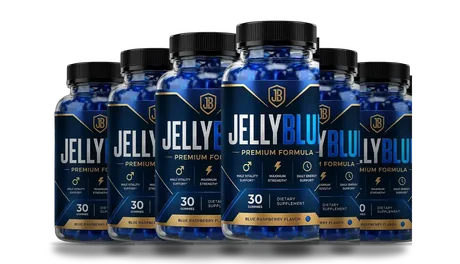
The nine-point checklist turns those into something you can score, and applies it to JellyBlue at the end, including where this product loses points.
Who publishes this JellyBlue guide?
- Leisegang K, Finelli R, Sikka SC, Panner Selvam MK. Eurycoma longifolia (Jack) Improves Serum Total Testosterone in Men: A Systematic Review and Meta-Analysis of Clinical Trials. Medicina (Kaunas). 2022;58(8). PMID 36013514. https://pubmed.ncbi.nlm.nih.gov/36013514/
- Kotirum S, Ismail SB, Chaiyakunapruk N. Efficacy of Tongkat Ali (Eurycoma longifolia) on erectile function improvement: systematic review and meta-analysis of randomized controlled trials. Complement Ther Med. 2015;23(5):693-8. PMID 26365449. https://pubmed.ncbi.nlm.nih.gov/26365449/
- Leitão AE, Vieira MCS, Pelegrini A, da Silva EL, Guimarães ACA. A 6-month, double-blind, placebo-controlled, randomized trial to evaluate the effect of Eurycoma longifolia (Tongkat Ali) and concurrent training on erectile function and testosterone levels in androgen deficiency of aging males (ADAM). Maturitas. 2021;145:78-85. PMID 33541567. https://pubmed.ncbi.nlm.nih.gov/33541567/
- Shin BC, Lee MS, Yang EJ, Lim HS, Ernst E. Maca (L. meyenii) for improving sexual function: a systematic review. BMC Complement Altern Med. 2010;10:44. PMID 20691074. https://pubmed.ncbi.nlm.nih.gov/20691074/
- Gonzales GF, Córdova A, Vega K, Chung A, Villena A, Góñez C, Castillo S. Effect of Lepidium meyenii (MACA) on sexual desire and its absent relationship with serum testosterone levels in adult healthy men. Andrologia. 2002;34(6):367-72. PMID 12472620. https://pubmed.ncbi.nlm.nih.gov/12472620/
- Arumugam V, Vijayakumar V, Balakrishnan A, Bhandari RB, Boopalan D, Ponnurangam R, Sankaralingam Thirupathy V, Kuppusamy M. Effects of Ashwagandha (Withania Somnifera) on stress and anxiety: A systematic review and meta-analysis. Explore (NY). 2024;20(6):103062. PMID 39348746. https://pubmed.ncbi.nlm.nih.gov/39348746/
- Cheah KL, Norhayati MN, Husniati Yaacob L, Abdul Rahman R. Effect of Ashwagandha (Withania somnifera) extract on sleep: A systematic review and meta-analysis. PLoS One. 2021;16(9):e0257843. PMID 34559859. https://pubmed.ncbi.nlm.nih.gov/34559859/
- Björnsson HK, Björnsson ES, Avula B, Khan IA, Jonasson JG, Ghabril M, Hayashi PH, Navarro V. Ashwagandha-induced liver injury: A case series from Iceland and the US Drug-Induced Liver Injury Network. Liver Int. 2020;40(4):825-829. PMID 31991029. https://pubmed.ncbi.nlm.nih.gov/31991029/
- Dell'Agli M, Galli GV, Dal Cero E, Belluti F, Matera R, Zironi E, Pagliuca G, Bosisio E. Potent inhibition of human phosphodiesterase-5 by icariin derivatives. J Nat Prod. 2008;71(9):1513-7. PMID 18778098. https://pubmed.ncbi.nlm.nih.gov/18778098/
- Anand Ganapathy A, Hari Priya VM, Kumaran A. Medicinal plants as a potential source of Phosphodiesterase-5 inhibitors: A review. J Ethnopharmacol. 2021;267:113536. PMID 33137431. https://pubmed.ncbi.nlm.nih.gov/33137431/
- Shiraseb F, Asbaghi O, Bagheri R, Wong A, Figueroa A, Mirzaei K. Effect of l-Arginine Supplementation on Blood Pressure in Adults: A Systematic Review and Dose-Response Meta-analysis of Randomized Clinical Trials. Adv Nutr. 2022;13(4):1226-1242. PMID 34967840. https://pubmed.ncbi.nlm.nih.gov/34967840/
- Ashor AW, Lara J, Siervo M. Medium-term effects of dietary nitrate supplementation on systolic and diastolic blood pressure in adults: a systematic review and meta-analysis. J Hypertens. 2017;35(7):1353-1359. PMID 28319596. https://pubmed.ncbi.nlm.nih.gov/28319596/
- Foshati S, Nouripour F, Sadeghi E, Amani R. The effect of grape (Vitis vinifera) seed extract supplementation on flow-mediated dilation, blood pressure, and heart rate: A systematic review and meta-analysis of controlled trials with duration- and dose-response analysis. Pharmacol Res. 2022;175:105905. PMID 34798267. https://pubmed.ncbi.nlm.nih.gov/34798267/
- Campbell N, Clark JP, Stecher VJ, Thomas JW, Callanan AC, Donnelly BF, Goldstein I, Kaminetsky JC. Adulteration of purported herbal and natural sexual performance enhancement dietary supplements with synthetic phosphodiesterase type 5 inhibitors. J Sex Med. 2013;10(7):1842-9. PMID 23634714. https://pubmed.ncbi.nlm.nih.gov/23634714/
- US Food and Drug Administration. Tainted Sexual Enhancement Products. Medication Health Fraud, accessed September 2026. https://www.fda.gov/drugs/medication-health-fraud/tainted-sexual-enhancement-products
- NIH Office of Dietary Supplements. Dietary Supplements: What You Need to Know. Accessed September 2026. https://ods.od.nih.gov/factsheets/WYNTK-Consumer/
- NIH Office of Dietary Supplements. Dietary Supplements for Exercise and Athletic Performance: Fact Sheet for Health Professionals. Accessed September 2026. https://ods.od.nih.gov/factsheets/ExerciseAndAthleticPerformance-HealthProfessional/
- US Food and Drug Administration. Questions and Answers on Dietary Supplements. Accessed September 2026. https://www.fda.gov/food/information-consumers-using-dietary-supplements/questions-and-answers-dietary-supplements
- National Center for Complementary and Integrative Health. Using Dietary Supplements Wisely. NIH, accessed September 2026. https://www.nccih.nih.gov/health/using-dietary-supplements-wisely
- National Center for Complementary and Integrative Health. Dietary and Herbal Supplements. NIH, accessed September 2026. https://www.nccih.nih.gov/health/dietary-and-herbal-supplements